Hiking Maps

Pages: Prev 1 2 3 4 5 Next

2010 Draft of New Great Smoky Mountains Trail Map

Thursday, March 18th, 2010

Welcome to our new topographic map of the Great Smoky Mountains National Park. At 1:50,000 scale, this will be the most detailed map published of the park. We’ve added a couple new features to help better navigate in this wonderful national park, such as the new official trail system and elevation contours. We’re almost done!

You can check out a public draft here: http://www.outrageGIS.com/grsm/draft and please tell us what you think in the below comments section.

New Features:

  • 1:50,000 scale, which is 140% enlargement of the Trails Illustrated map
  • 100-foot contour interval with 500-foot index contours
  • Canopy cover type indicating deciduous, evergreen, shrub, grass, and open areas
  • 1-minute Geographic coordinate grid for GPS
  • Elevations for trail intersections and other points of interest
  • Mileage shown between trail intersections and campsites
  • Updated official trails and campsites
  • Unique hillshading shows topography clearly

Ridge Trail at Cumberland Gap NHP

Saturday, May 9th, 2009

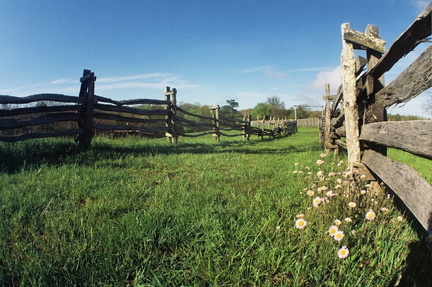
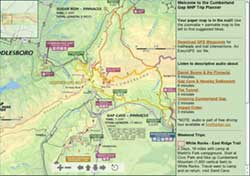
The Pixel Team hiked up to Hensley Settlement after the Southeastern Foot Trails Conference and it was a fantastic, sublime experience. Sherman Hensley hiked up this mountain in 1903 with his pregnant wife and all of the tools and livestock they could drive. They saw a large, flat expanse on the mountain summit and carved out a pioneer homestead. Two backcountry camps are within 0.5 miles of this historic community.
Camp at Hensley

Buy this mapHiker Hiker Cumberland Gap Map
Distance: 16 Miles round-trip from the Civic Park trailhead at Ewing
Difficulty: +++
Scenic Views: ++++
Elevation Relief: 2,000ft ^^
Ownership: Cumberland Gap, NPS

Cumberland Gap Trail Map: $12

.

(more…)


3D map of Natural Bridge State Park

Wednesday, March 4th, 2009

If you have used our Red River Gorge hiking map, you’ve noticed that trail intersections are labeled. This is to help read the elevation profiles. Another way to represent relative changes in elevation is with a 3D map. Below is a simple render of the core, historic trails in Natural Bridge State Resort Park. There’s about 7 miles of trail shown on this map, and they’re probably the most used trails in the Red River Gorge.

(more…)


Chimney Tops and Road Prong Trail

Saturday, July 26th, 2008

Appalachian TrailHiker Great Smokies Trail Atlas
Distance: 9 Miles round-trip from trailhead
Difficulty: +++
Scenic Views: +++
Elevation Relief: 1,800ft ^^
Ownership: Great Smoky Mountains, NPS

Great Smokies Trail Atlas: $16

As you drive from the Sugarlands Visitor Center on Newfound Gap Road, you’ll catch glimpses of the Chimney Tops, a summit outcropping of tough, erosion resistant metamorphic rock. Originally deposited as sedimentary rock, such as shale, sandstone, and siltstone over 500 million years ago, the rocks that make the mountains here first experienced metamorphosis becoming a hard, slate-type rock, and then mountain building forces to form the folded and faulted Appalachians, with peaks as high as the Rocky Mountains. Today, after 200 million years of erosion, Chimney Tops stands at 4,800 feet and roughly a 1,400 vertical foot climb from the trailhead below. As you walk and climb along the last quarter-mile of the ridge, you’ll clearly see the bedrock tilting down to the right, evidence of the great tectonic forces that thrust up the mountains that you’ll admire around you from this inspiring prominence.

The name the Cherokee Indians gave Chimney Tops, was Forked Antler. As you scan the ridge from valley overlooks, you can easily imagine the shape of a deer’s antler. The first 3/4 mile of this hike follows Road Prong, a stream that reaches the crest line of the Smokies. If you continue up Road Prong trail, you’ll hike one of the oldest trails in the area. Long used as an Indian path through the mountains, the path was expanded during the Civil War to move troops through the Smokies connecting Smokemont, North Carolina with Gatlinburg, Tennessee. The road was called the Oconaluftee Turnpike and it passed through Indian Gap at the summit. Today the summit is marked with the Appalachian Trail and Indian Gap is called Luftee Gap.

A note about climate and slope in the mountains. The high mountains in the area form steep, thinly soiled slopes, which are historically prone to landslides after extended periods of heavy rain. You’ll see many scars and debris fields from previous landslides as you hike to the summit. And the Smokies know plenty about rain: the summit line receives on average more precipitation anywhere east of the U.S. mountain west coast.

Because of the elevation, the temperature is similar to Canada, but because of the relief (over a mile above surrounding foothills), the precipitation pattern is more typical marine, creating colder and wetter conditions. Because of the proximity to Gulf and Atlantic tropical air masses, summer storms, especially remnants of hurricanes, can produce torrential rain events. These storms increase flash flooding and landslide hazards. In the late winter, polar air masses from the north can create an upslope flow forcing up moisture rich air and produce heavy snowfall. With an average of 5-8 inches of rain per month, streams can be difficult to cross anytime of the year. Please contact the park service before any backcountry trip.


Furnace Arch, Sheltowee Trace

Friday, July 11th, 2008

STHiker Hiker Hiker Cave Run Lake Trail Guide
Distance: 6 Miles round-trip from trailhead
Difficulty: ++
Scenic Views: +++
Elevation Relief: 500ft ^
Ownership: Daniel Boone NF, USFS

Cave Run Lake Trail Guide: $12

Imagine the scene around Clear Creek Iron Furnace in the 1830’s, the trailhead for this hike. Scores of men were clearing old growth trees by acres a week, cutting limestone from the creeks, and hauling iron ore rock from neighboring hillsides to fuel one of largest iron furnaces in Kentucky. Iron was produced roughly nine months out of the year. The process was a laborious affair, but the profit was great, until much larger deposits of iron ore were found in the southern Appalachians and around the Great Lakes.

ST

The cut wood was slowly burned in dirt covered pit to make charcoal. The furnace was ‘charged’ from the top in layers of ore, charcoal, and limestone and when full, the furnace was stoked with forced air until the charcoal was white-hot and the whole furnace roared tremendously and blasted heated air, flames, and a shower of sparks from the top. That’s when the furnace was in blast and slowly molten iron would flow from furnace bottom and fill trenches of sand to make pig iron ingots. The iron ore found in rocks is basically rust and is rendered as elemental iron in series of chemical reactions in the furnace.

Today you can still see many aspects of the furnace operation. The hand-cut limestone furnace still stands. Glass and slag are found downstream. The fuel for charcoal of course grows around abundantly. The limestone outcrops as you ascend the trail south from furnace. The Sinks is a sinkhole in the limestone bedrock produced by the slow process of erosion. Atop the southern extent of this trail, you’ll find the same rugged sandstone the produces the great rockshelters in the Red River Gorge. In fact, if you continue hiking the Sheltowee Trace south, you’ll travel through the heart of the Gorge.

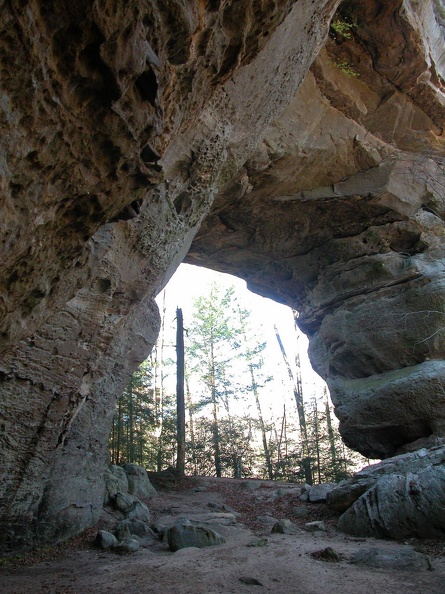
Furnace Arch is a low broad arch that resembles the iron furnace in shape. The sandstone outcrops in the area offer a few campsites, though no water along the ridge top. The scenic quality of this area, with blooming rhododendron against craggy boulders, is worth a day of exploration.